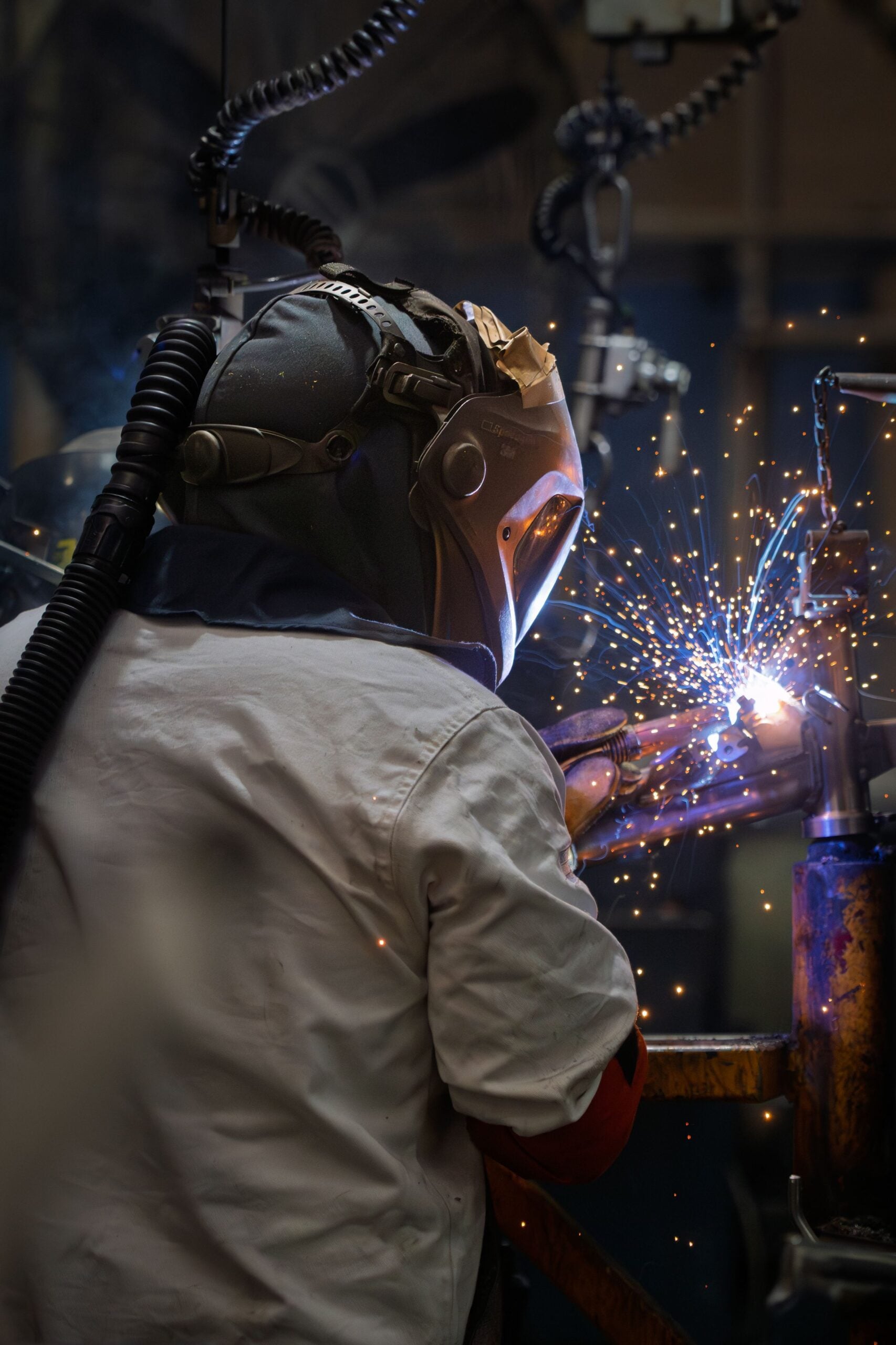
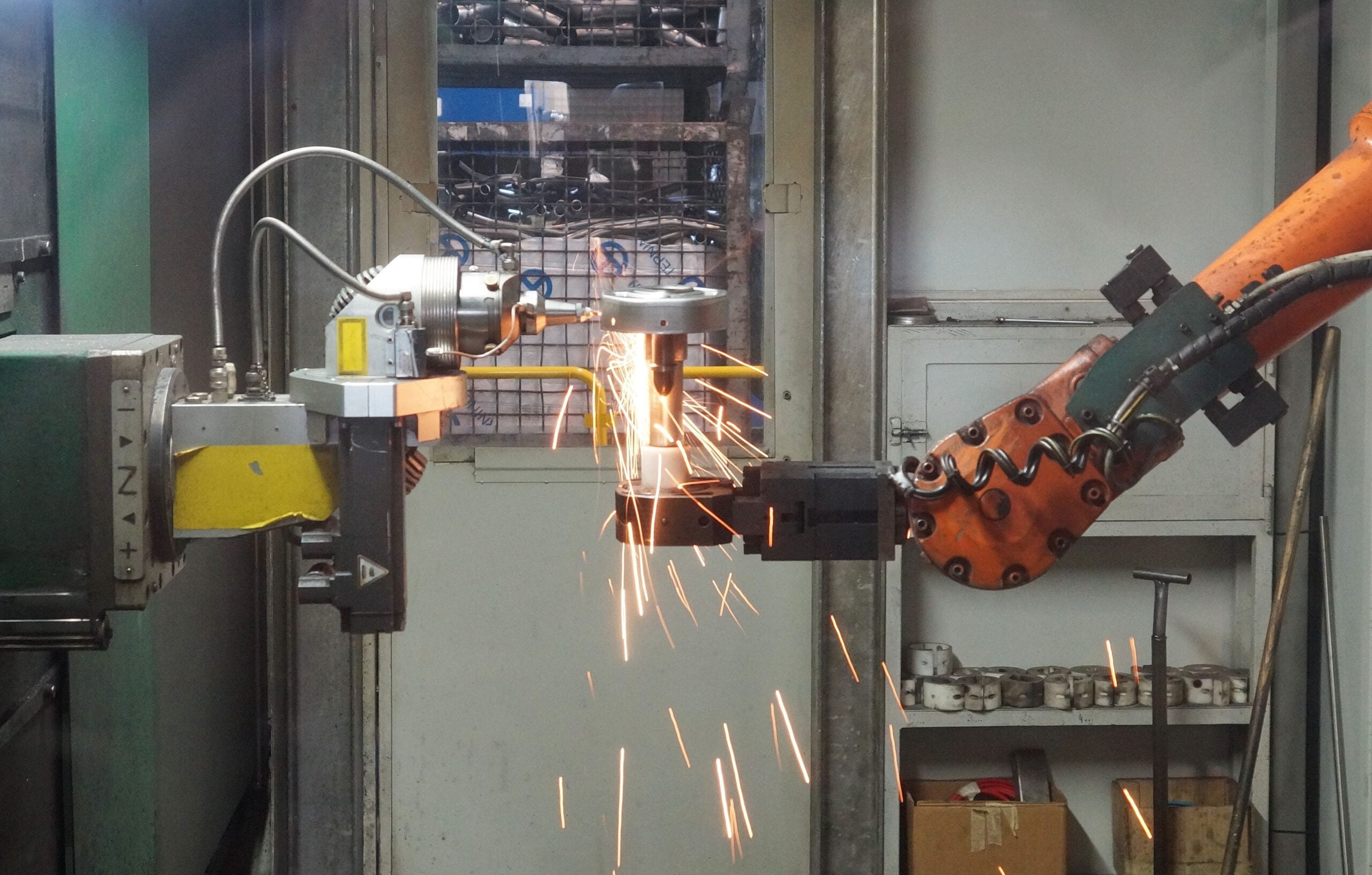
Walk into a fabrication shop that uses industrial welding robots, and it won’t take long to observe the consistency. The torch follows the same path, again and again.
This is all possible thanks to robotic welding technology. Machine shops use it for everyday jobs, especially when they need to make the same part over and over.
While the weld itself is uniform when it comes to placement and speed, robotic welding in metal fabrication requires more than just programming the arm. The joint design and material response, along with fit-up and heat, can all play a role in the final dimensions of the finished assembly.
How close can a robotic system get you to your shop’s print specifications? Here’s a rundown of what you can expect from the equipment, and what you’re responsible for in the process.
How Precise Are Automated Welding Systems?
With precision robotic welding, there’s a difference between robot repeatability and the tolerance you can hold on a finished part.
Modern robotic arms are able to return to the same spot within fractions of a millimeter. But the workpiece must be in the correct position for the weld joint, and if it isn’t, the robot can hit its mark every time and still miss the joint.
The finished assembly is the real test. While we’ve seen impressive advancements in robotic welding in metal manufacturing, no process is perfect. Sample parts must be run and measured for a variety of situations before a shop can say what tolerance it can maintain over a long production run.
What Factors Affect Robotic Welding Tolerances?
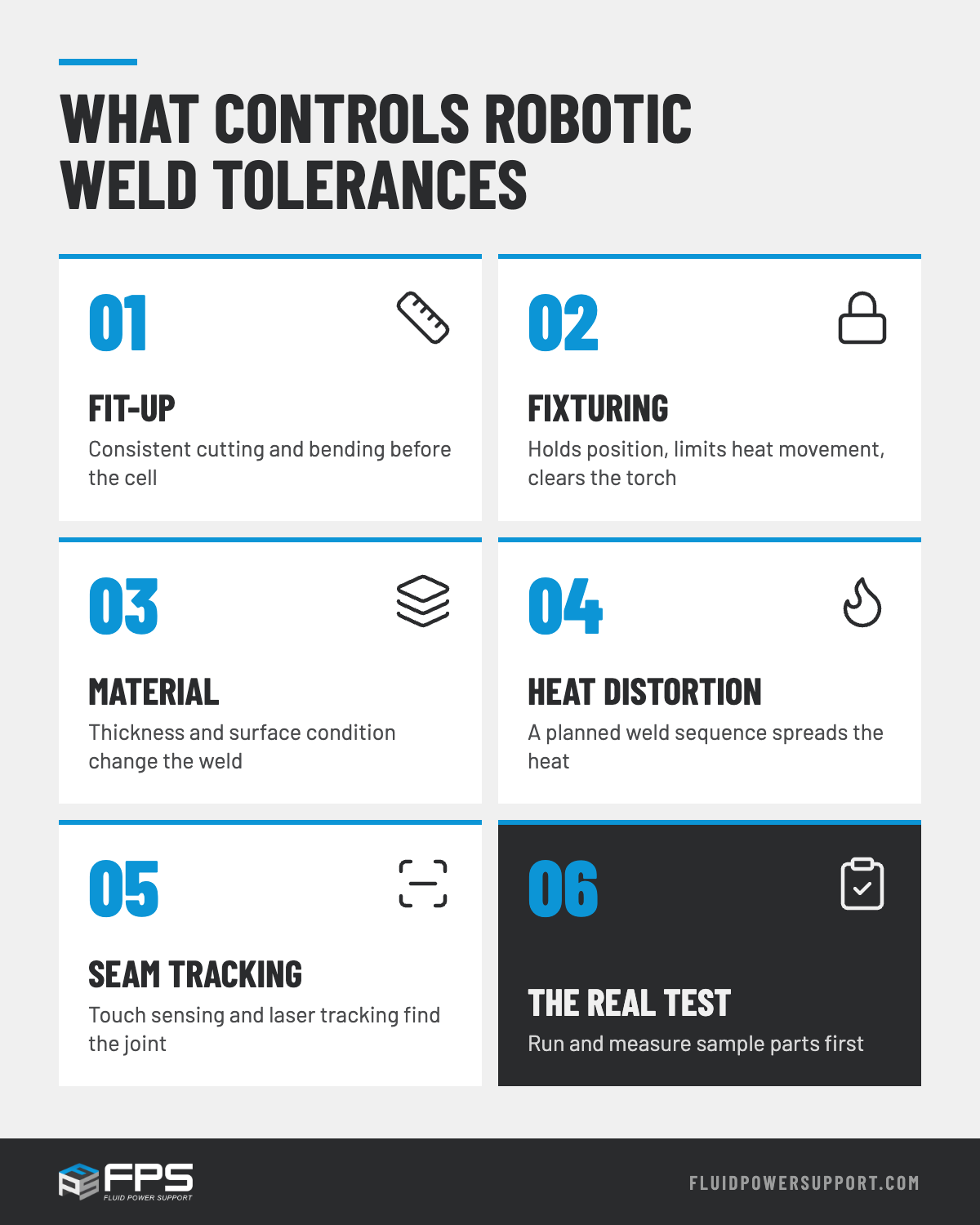
Achieving consistent results with metal fabrication automation relies on managing the work before, during, and after the torch fires. Here’s what the shop needs to get right to keep your parts within tolerance.
How Does Part Fit-Up Affect the Weld?
When a joint gap changes, experienced welders adjust their technique accordingly. For a basic robotic program, however, the parts must be set up consistently.
Good fit-up is critical. And it needs to be achieved long before the parts ever reach the welding cell. Consistent cutting and bending mean fewer gaps for the welding process to deal with later.
What Does the Fixture Need to Control?
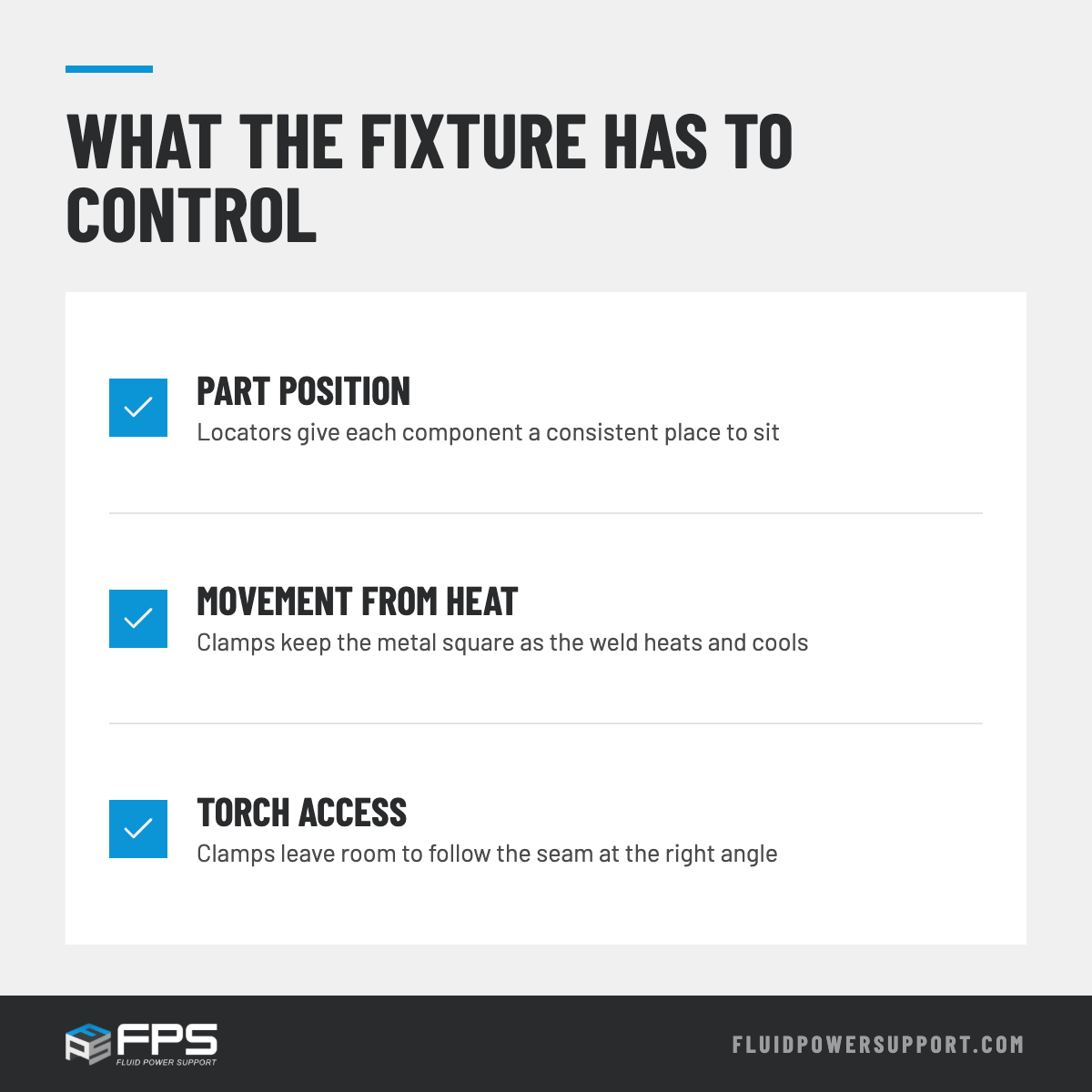
The fixture does a lot of the work behind dependable welding automation solutions. It holds the pieces in position while leaving the torch a clear path to the joint:
- Part position: Locators give each component a consistent place to sit, so the crew can load the next set of parts without lining everything up by eye.
- Movement from heat: Clamps help keep the metal square while the weld heats and cools. Even a firmly clamped assembly can move after release.
- Torch access: Clamp placement gives the fixture a good hold on the part while leaving the torch enough elbow room to follow the seam at the proper angle.
How Do Material Differences Affect Results?
Material thickness and surface condition can change how the weld behaves. Oil and mill scale can interfere with weld quality, while thinner stock can burn through with too much heat.
Because these conditions can vary, a setup that worked on one batch may need adjustment on the next. Maintaining material consistency and a clean weld area gives the crew fewer surprises once the torch gets moving.
How Can the Shop Limit Heat Distortion?
Metal moves when it gets hot, and that can pull a frame out of square as the weld cools. Bigger welds also mean more heat and more shrinkage, so putting down extra weld metal can cause problems.
A planned welding sequence helps control distortion by spreading the heat across the assembly. Keeping that heat under control helps keep the finished part square and within spec.
How Do Seam Tracking and Sensing Help?
Parts aren’t always going to sit exactly the same every time. Touch sensing can find where the part actually is before welding, and laser tracking can follow the joint and adjust the path as it goes.
That gives the robot some wiggle room when a part isn’t sitting exactly where it should. These systems can handle small differences, but there’s no getting around good fit-up.
Sensing can only do so much if the rest of the setup is off, so torch calibration and a steady wire feed still play a part.
How Does Robotic Welding Compare With Manual Welding?
Both can lay down a solid weld when the setup is right. The big difference is how they handle repeat work and the little changes that come with each part.
| Feature | Manual welding | Precision robotic welding |
| Torch placement | Depends on operator skill and access | Repeats a programmed path within the system’s limits |
| Travel speed | Operator controls speed throughout the pass | Robot maintains programmed motion |
| Cycle time | Varies with the job and operator | More predictable on repeat work, with loading and maintenance still required |
| Changing joint gaps | Skilled welders can adjust within procedure limits | Requires consistent fit-up or suitable sensing and adaptive controls |
| Distortion control | Uses fixtures, tacking, and a planned sequence | Uses similar controls with repeatable programmed sequences |
So, where does robotic welding pull ahead on repeat work? A programmed system can run the same path and settings from part to part, while newer systems give shops even more tools to work with.
For example, welding robotics trends are bringing better monitoring and more production data onto the shop floor.
AI in welding manufacturing can flag certain process changes, while smart manufacturing welding tools give crews more information to catch changes from one run to the next.
The future of robotic welding will likely bring more of these capabilities into everyday production.
How Do You Set Realistic Tolerances for Your Project?
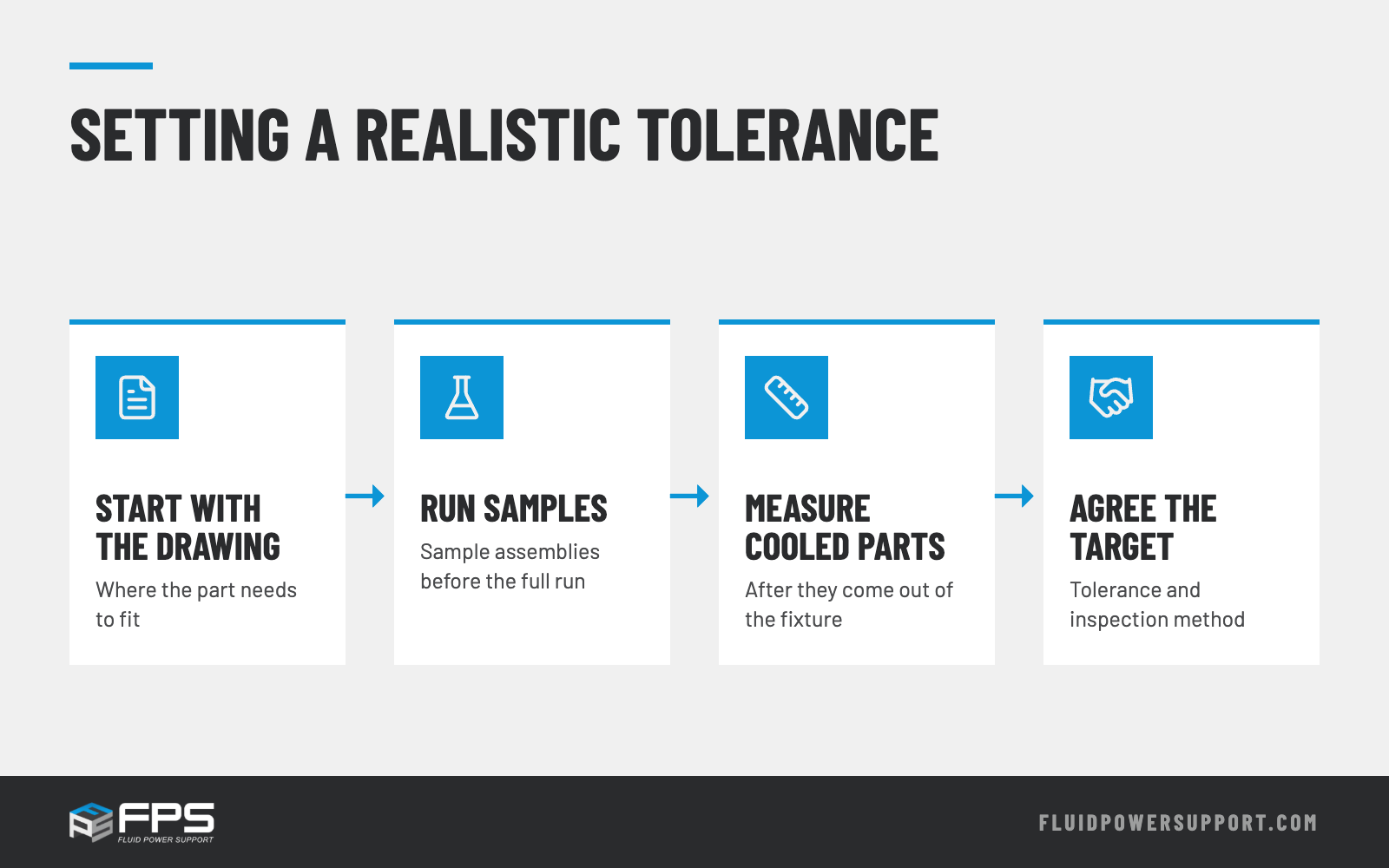
Start with the drawing and where the part needs to fit. Some areas may need tighter tolerances than others, especially mounting surfaces or anything machined after welding.
Sample assemblies can help confirm what the process can hold before the full run. Measuring those parts after they’ve cooled and come out of the fixture gives a better picture of what the finished assembly will actually do. Once the tolerance and inspection method are agreed on, production has a clear target to work from.
Get Your Robotic Welding Project Started
Tight tolerances don’t happen by accident on a robotic welding job. Manufacturing process automation works best when the whole job is dialed in, from the parts going into the fixture to the finished assembly coming out.
Got a part that needs to hold a tight tolerance? Bring your drawings to Fluid Power Support, and let’s review your robotic welding requirements.
We’ll work through the fit and fabrication details with you so everything is squared away before production gets rolling.
Frequently Asked Questions
What types of projects are best suited for precision robotic welding?
Robotic welding is especially useful for repeat-production jobs that involve similar or identical parts. Consistent components and predictable joint locations make it easier to develop a repeatable welding process and maintain dimensional requirements throughout a production run.
Why is fixturing important for robotic welding tolerances?
A fixture positions and holds each component so the robot encounters the weld joint in a consistent location. Good fixtures also help limit movement during welding while providing enough clearance for the torch to reach the joint correctly.
Does robotic welding eliminate weld distortion?
No. Welding still introduces heat into the material, which can cause expansion, shrinkage and movement. Proper fixturing, weld sequencing and heat management can help control distortion and keep finished assemblies closer to their specified dimensions.